
Most Commercial Roof Problems Are Already Happening Before Anyone Notices — Here’s How to Get Ahead of Them
For a commercial property, the roof is not just part of the building. It is part of your risk management plan.
A roof leak can interrupt business operations, damage inventory, create tenant complaints, affect lease renewals, and turn into an insurance issue if it is not documented properly. That is why commercial roof inspections matter for property managers, building owners, business operators, general contractors, and developers across Austin and Central Texas.
If you manage a retail center, office building, warehouse, multifamily property, restaurant, medical office, or light industrial facility, a professional inspection can help you understand the condition of the roof before small issues become expensive disruptions.
This guide explains what commercial roof inspections include, how often they should happen, what should be documented in a commercial roof inspection report, and how to prepare before a contractor visits your property.
A Residential Inspection & Commercial Inspection Are Not the Same Thing — Here’s Why It Matters
Treating a commercial roof like a larger version of a residential one is one of the most common mistakes property managers make. The systems, the stakes, and the inspection process are fundamentally different.
A residential inspection typically covers:
- Shingles, flashing, valleys, and vents
- Gutters and attic ventilation
- Storm damage and visible wear
A commercial inspection goes further:
- Larger roof areas and low-slope surfaces
- Membrane seams, parapet walls, and expansion joints
- Drainage systems and ponding water risk
- Rooftop equipment and HVAC curbs
- Roof penetrations, access points, and tenant-related concerns
The consequences are different too:
- A residential leak damages a room
- A commercial leak can shut down operations, destroy inventory, trigger tenant complaints, affect lease renewals, and create insurance documentation gaps
A commercial inspection isn’t a quick visual scan. It’s a structured review of every condition that could affect performance, safety, and future cost — because for a commercial property, the roof isn’t just a building component. It’s part of your risk management plan.
What Does a Commercial Roof Inspection Include?
A thorough commercial roof inspection covers far more ground than most property owners expect — and what gets checked depends entirely on the system installed on your building.
Every inspection covers the roof as a complete system:
- Roof surface, membrane, or covering — condition, wear, and integrity
- Seams and laps — open seams or separation are common failure points
- Flashing, coping, and edge metal — where water most often finds a way in
- Drainage — gutters, downspouts, scuppers, and signs of ponding water
- Roof penetrations — skylights, hatches, HVAC curbs, and pipe boots
- Parapet walls and expansion joints — often overlooked, frequently problematic
- Rooftop equipment — damage, loose components, and improper installations
Inspectors also look for:
- Punctures, blisters, and open seams
- Deteriorated sealants and clogged drains
- Soft or compressed areas beneath the membrane
- Previous repair patches that may be failing
- Storm damage concentrated around equipment and edges
- Areas where water is moving in the wrong direction
For sloped commercial roofs, the inspection also includes:
- Shingles, tile, or metal panels and their fasteners
- Ridge details, valleys, and material transitions
Here’s what most property owners don’t realize: a TPO roof doesn’t fail the same way a modified bitumen roof does, and a metal panel system has entirely different failure points than a shingle roof. A qualified contractor should know what to look for based on the specific system on your building — not run a generic checklist that misses the issues most likely to affect your property.
Commercial Roof Inspection Checklist
A commercial roof inspection checklist helps ensure that important details are not missed.
The checklist should cover the visible condition of the roofing material, seams, laps, fasteners, flashing, roof edges, drainage points, penetrations, rooftop units, curbs, parapet walls, gutters, scuppers, downspouts, and previous repair areas. It should also note any visible interior evidence of water intrusion, such as ceiling stains, wet insulation, mold concerns, wall damage, or recurring leak reports from tenants.
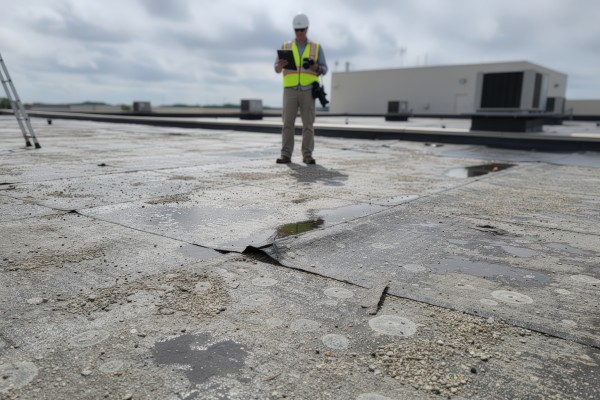
Drainage is especially important on commercial roofs. Standing water can accelerate roof deterioration, increase weight on the roof structure, and expose weak points around seams or penetrations. If ponding water appears after rain, that should be documented.
The inspection should also account for site-specific conditions. A restaurant roof may have grease-related concerns around exhaust systems. A retail center may have multiple HVAC units and tenant penetrations. A warehouse may have large roof spans where drainage and movement are especially important. A multifamily property may have more tenant reports and access limitations.
The goal of the checklist is not to overwhelm the property manager. The goal is to create a clear record of what was inspected, what was found, and what should happen next.
How Often Should a Commercial Roof Be Inspected?
Many property managers ask: how often should a commercial roof be inspected?
A good general rule is to inspect a commercial roof at least twice a year, usually in the spring and fall, and after major weather events. In Central Texas, inspections are especially important after hail, high winds, heavy rain, or falling debris.
However, inspection frequency should also depend on the age, condition, material, and risk level of the roof. A newer commercial roof with no known issues may need routine seasonal inspections. An older roof, a roof with recurring leaks, or a roof over high-value inventory may need more frequent checks.
Commercial roofs with heavy foot traffic, rooftop mechanical equipment, past repairs, drainage concerns, or tenant build-outs should also be monitored more closely. HVAC technicians, cable installers, maintenance crews, and other vendors may access the roof throughout the year. Even when they are careful, foot traffic and equipment work can create punctures, loose seams, or disturbed flashing.
The safest approach is to treat roof inspections as part of the building’s preventive maintenance schedule, not something you only do after a leak appears.
Signs a Commercial Roof Needs Repair or Replacement
Commercial roof problems are not always obvious from the ground. In many cases, the first warning sign comes from a tenant, maintenance worker, or ceiling stain.
Common signs a commercial roof needs repair or replacement include recurring leaks, ponding water, visible membrane damage, open seams, loose flashing, cracked sealant, damaged parapet areas, interior water stains, moldy smells, wet insulation, blistering, punctures, rusted metal panels, or storm damage around rooftop equipment.
If repairs keep happening in the same area, that may point to a deeper issue. A single leak may be repairable. Multiple leaks across different areas may suggest aging materials, poor drainage, widespread storm damage, or a roof system nearing the end of its service life.
Replacement may become the better option when repairs are no longer cost-effective, the roof has widespread deterioration, the system is beyond its expected lifespan, or continued leaks are creating business interruption and liability concerns.
A professional inspection helps separate minor repair needs from larger capital planning decisions.
Why Inspection Records Matter for Insurance Claims
Commercial roof documentation can be extremely valuable when insurance is involved.
If your building is damaged by hail, wind, or another covered event, inspection records may help show the roof’s condition before and after the storm. That can be useful when determining whether damage is new, storm-related, pre-existing, maintenance-related, or part of normal wear.
A commercial roof inspection report can also help property owners communicate more clearly with adjusters. Photos, notes, roof maps, damage locations, and repair recommendations create a stronger record than memory alone.
This does not mean a roofing contractor decides whether your insurance company approves a claim. The carrier makes coverage decisions based on the policy and the adjuster’s findings. But thorough documentation can help property managers avoid being unprepared when questions come up.
For commercial properties, documentation is not just helpful for claims. It can also support maintenance budgets, capital planning, lender reviews, ownership reporting, and lease renewal discussions.
What Should a Commercial Roof Inspection Report Include?
A commercial roof inspection report should be clear enough for decision-makers who may not be roofing experts.
At minimum, the report should identify the property, roof areas inspected, roof type, visible condition, areas of concern, photos, recommended repairs, urgency level, and any limitations of the inspection. If the property has multiple roof sections, the report should separate findings by area so the owner or manager knows where issues are located.
A useful report may also include notes about drainage, ponding water, penetrations, flashing, previous repairs, rooftop equipment, interior leak evidence, and whether follow-up evaluation is recommended.
The best reports do more than list problems. They help the property manager decide what to do next. That may mean scheduling a repair, budgeting for replacement, monitoring a section of roof, clearing drainage, coordinating with an HVAC vendor, or preparing documentation for an insurance claim.
How to Prepare for a Commercial Roof Inspection
If you are scheduling an inspection, a little preparation can make the visit more useful.
Start by gathering basic information about the building. If you know the roof age, roof type, warranty status, previous repair history, or recent storm events, have that information ready. If tenants have reported leaks, collect the locations, dates, photos, and details about when the leaks occur.
Make sure roof access is available. If the building requires keys, ladder access, tenant coordination, or management approval, plan that in advance. If rooftop equipment is locked or certain areas require escort, communicate that before the appointment.
It also helps to identify interior areas of concern. If there are ceiling stains, wet tiles, musty smells, or wall damage, the inspector may want to see those areas to help connect interior symptoms with exterior roof conditions.
You do not need to know the technical details. You just need to help the inspector understand what has been happening at the property.
Why Skipping Inspections Can Cost More Later
Skipping commercial roof inspections is easy when there are no active leaks. But that is exactly when inspections can be most valuable.
A small puncture, clogged drain, loose flashing detail, or separated seam may be inexpensive to correct early. Left alone, the same issue can lead to wet insulation, interior damage, tenant disruption, mold concerns, structural deterioration, or emergency repairs.
For property managers, inspections are not about fear. They are about control. You want to know what is happening on the roof before tenants, storms, or insurance deadlines force the issue.
Routine inspections can also help with budgeting. Instead of being surprised by a major replacement need, owners can plan ahead, prioritize repairs, and avoid unnecessary emergency spending.
Commercial Roof Inspections Before Lease Renewals, Sales, or Renovations
A commercial roof inspection is especially useful before major business or property decisions.
Before a lease renewal, inspection records can help clarify whether roof-related maintenance issues need to be addressed. Before a property sale or acquisition, a roof inspection can help identify potential capital expenses. Before a tenant build-out, it can help determine whether rooftop penetrations, HVAC work, or drainage changes could affect the roof system.
General contractors and developers may also benefit from a roof inspection before renovation work begins. Knowing the roof condition early can prevent change orders, delays, and disputes once construction is underway.
The roof is one of the most expensive exterior systems on a commercial property. It should be part of the due diligence process.
What Happens After the Inspection?
After the inspection, you should receive a straightforward explanation of the findings.
If the roof is in good shape, the contractor may recommend routine monitoring and future inspections. If minor issues are found, repairs may be recommended. If the roof has widespread damage, drainage problems, recurring leaks, or advanced age, replacement planning may be discussed.
A trustworthy commercial roofing contractor should explain the difference between urgent repairs, preventive maintenance, and long-term replacement planning. Not every issue requires immediate replacement. At the same time, repeatedly patching a failing roof may not be the best use of the property’s maintenance budget.
The goal is to give property managers and owners enough information to make a practical, defensible decision.
Commercial Roof Inspections in Austin and Central Texas
Central Texas commercial roofs deal with intense heat, UV exposure, sudden storms, hail, heavy rain, and high winds. These conditions can wear down materials, stress seams, clog drainage systems, and expose weak points around rooftop equipment.
Sprauer Roofing Co. helps Austin and Central Texas property owners evaluate commercial roof conditions, document damage, and plan the right next step. Whether you manage a retail center, office building, warehouse, multifamily property, or light industrial facility, a professional inspection can help you protect the building and avoid preventable disruptions.
If you are unsure what condition your commercial roof is in, or if you need documentation for maintenance planning, insurance, or upcoming property decisions, schedule a commercial roof inspection with Sprauer Roofing Co. today.